Monday, January 08, 2007

Buddha Boy Takes Up The Sword

He’s back, and he means business. Just when you began to think that he was gone for good, Ram Bomjon, Nepal’s famous Buddha boy has reappeared. You may recall that I reported here on thinkBuddha that the Buddha Boy had been creating created quite a stir in the Bara district of Nepal, sitting under a tree and – so his supporters claimed – going for months without food. Not even a snack.

Anyway, in march of 2006, Ram Bomjon disappeared into the jungle so he could meditate undisturbed. This is a shame because although he hung around for quite long enough for his activities to attract a nice sum in donations, it wasn’t quite long enough for the claims made on his behalf to be verified.

According to Khantipur online, the prodigy appeared to some hunters on Christmas day, and then kindly put in an appearance for the media, but this time around alarmingly brandishing a sword (“even the Buddha”, he is quoted as saying in the Daily Telegraph, “had to protect himself”). He said that he had still eaten nothing but medicinal herbs during his time in the jungle, and that henceforth he would be meditating by what is referred to as the “historical Halkoriya pond”. ThinkBuddha.org

Everyone being asked about the boy say that they believe in him. When asked a monk “What do you think?” He says this is a basic soul, we need to be considerate about. While someone is praying for the people, nation and all the living beings where as others are drowned in greed and sin, fighting and killing each other senselessly. After looking at him I think peace will come to this country. He also confirms it’s true what people are saying about the boy.

A driver who’s driving that way before the boy started to meditate says he’s been watching him from the very beginning and had seen three 3 different forms of him (morning, afternoon and evening). He looks fair in the morning, faint in the afternoon and glows in the evening. He says others might doubt but I totally believe in him.
Nirlog

Blog For A Democratic Nepal

Tuesday, December 26, 2006

Buddha Boy - Bara Jungle

'Buddha Boy' Bomjon found in Bara jungle NIJGADH, BARA, Dec 25 - Ram Bahadur Bomjon, popularly known as the Buddha Boy, who had disappeared from the jungle of Ratanpuri in Bara district, nine months ago, has reappeared nearby the area.


The 17-year old teenager Bomjon, "meditating without any food or water" in the jungles of Ratanpuri village in the district disappeared under unknown circumstances in March this year and was found in the jungles near Pathlaiya-Nijgadh road section of the Mahendra Highway on Sunday. Local villagers who had been out hunting found Bomjon in dense forest located 5 km west of the highway yesterday night. Bomjon appeared before the media and local villagers this afternoon in the same place.

His disappearance got widespread national and international coverage after news reports about his sudden abandonment of the meditation site at Charkose Jhadi of Ratanpur area in the district, where he had reportedly been meditating without food and water for ten months, were made public. Bomjon had a sharp sword with him when the media reached the site. When asked why a person in search of peace carried a sword, Bomjon replied that he had taken it for his "own protection."

"Lord Buddha used to arrange his security by himself. So, I was forced to do so myself," he told journalists, in response to a query.

The young man claimed he had still not eaten anything except herbal medicines during his meditation period. Bomjan also said that henceforth he would meditate near the historical Halkhoriya pond, some five kilometers west of the place where he used to meditate before his disappearance.

Following the information that he had been spotted, a large number of people, including his family members and security personnel have arrived at the place to see him. The hunters who first spotted the Buddha boy are Rajendra Kunwar, Ram Krishna Moktan, Jaya Bahadur Kunwar and Bal Krishna Ale, of Dumarwana.

Son of an ordinary farmer in Ratanpur village of Bara district, Bomjon, his supporters and followers claim, had meditated without eating and drinking for months. The Buddha boy has said that he does not want his new meditation site to be noisy and has said that his followers be allowed to see him only from a distance of some 10 meters. When asked what should be done with the donations that his followers and visitors would make, he urged to do anything with the donations, but keep from engaging in business or misuse.

The story of his meditation resembled an episode in the life of Gautam Buddha, who found enlightenment more than 2,500 years ago after 49 days. Coincidentally, Buddha was born only 257 km (160 miles) from Bara in 540BC. By Shankar Acharya & Upendra Lamichhane


The sword Bomjon has at his side, as reported, is a scimitar. The scimitar goes back to ancient Egypt. It is related to the god Amun, representing divinity. Amun was the god of air and is associated with the breath of life. He is the hidden one. Amun was perceived as upholding the rights to justice of the poor and aiding those who travelled, as protector of the way. Within Hindu mythology: Buddha is another Avatar of Vishnu. The tenth avatar is to be called Kalki Avatara. He will appear armed with a scimitar, riding on a white horse, and he will end the present age. After that, a whole new world will be created.


The December 2006 Winter Solstice was accompanied by the new moon, with the sickle moon reappearing on December 23. The Nepal Buddha Boy was sighted by villagers on December 24 and he met with journalists on December 25 carrying a scimitar. Those of you fascinated by ancient Alchemy and Archetypal Mythology will, no doubt, be fascinated by this report. Bomjon re-emerges after the cyclical return from the shortest day, the passing of the Winter Solstice.

The ancient texts are describing astronomical coordinates for changing planetary cycles. Pegasus (the white horse) in Aquarius. Pegasus flew out of the blood of Medusa when Persius slew her... this has to be an allegory for the formation of this part of the universe. "The Nymphs gave Perseus a cap of invisibility, winged sandals and the knowledge of where to find the Graiai... Hermes gave Perseus a mighty scimitar with which to slice off Medusa’s head." Is it possible Hindu myth of the sword which heralds a 'whole new world' is a comet arriving out of the constellation of pegasus at the dawning of the Age of Aquarius?

Monday, December 04, 2006

Old Forests Protect Environment


Old forests protect the planet, and humans need to start protecting the old forests.


GRANTS PASS Researchers have found soils in an old-growth forest in southern China are storing carbon at a rapid rate. If common to the soils of other old-growth forests, the finding could add combating global warming to the reasons for preserving them from logging, some scientists say.

Old forest sucks up greenhouse gas

By Jeff Barnard AP Environmental Writer
Friday, December 1, 2006 1:44 PM PST


The finding from soils in southern China goes against the generally accepted idea that old-growth forests are in balance, giving up as much carbon through decomposition as they take in from falling leaves and dying roots.

Why the soils act as a carbon sink remains unknown, but the study in today's edition of the journal Science gives a new way to think about how carbon works in old-growth forests, said Xuli Tang, a scientist with the South China Botanical Garden in Guangzhou, China, and co-author of the study.

“No country in the world has been trying to (preserve) old growth forest from carbon sink perspective because of the existence of the traditional paradigm,” although China is doing some large-scale forest restoration projects that could serve as significant carbon sinks, he said by e-mail.

Many scientists believe that an increase in carbon dioxide and other greenhouse gases from burning oil and coal is causing rising temperatures around the globe that are changing the climate, melting polar ice caps, raising sea levels and contributing to a growing number of plant and animal species going extinct.

One strategy for combating global warming is finding ways to store carbon so it is not released into the atmosphere.

By virtue of their age, old-growth forest soils are generally believed to be in balance, with the amount of carbon added to the soil from falling leaves, branches and dying roots offset by an equal amount of carbon released by the microbes that eat the leaves, branches and roots.

The research was conducted in the Dinghushan Biosphere Reserve in the southern China province of Guangdong, which is covered with 400-year-old subtropical evergreen broadleaf forest.

Taking a total of 230 samples over 24 years from the top eight inches of soil, the researchers found organic carbon levels went from about 1.4 percent in 1979 to 2.35 percent in 2003, an increase of 68 percent.

John Aber, professor of environmental studies at the University of New Hampshire, who did not take part in the study, said he was skeptical of the results, because they go against the prevailing research and are based on a relatively small number of samples.

However, given the high rate of change found in the study, the increased carbon may be coming from some recent change in the environment, such as industrial pollution, he said.

That could happen two different ways, he said. Increased nitrogen in the air could fertilize the forest, leading to more leaves falling to the ground and increasing carbon in the soil. An increase in toxins falling to the forest floor or increased acidity would slow down decomposition, leaving more carbon in the soil.

“This isn't business as usual for an old-growth forest,” said Aber. “If this can be found to be generally the case in old-growth forests everywhere, it could have huge implications.

“I think at this point it is an unusual result, and would have to be repeated and documented in other old-growth forests.”

Tang said that over the course of the study, the researchers observed a decrease in the amount of leaves and branches falling to the forest floor, a decrease in soil moisture and an increase in soil acidity.

Christopher Field, director of the Carnegie Institution Department of Global Ecology at Stanford University, did not take part in the study, but has worked in the Dinghushan Biosphere Reserve. He said the study may have caught the forest soils during an upswing in carbon storage, which is unlikely to be sustained.

“I think that this doesn't really change anything about the way we think of old-growth forests,” he said. “I guess it's solid evidence for the emerging consensus that old-growth forests are quite dynamic, that they have high rates of growth, high rates of decomposition, and at any period the balance between those could result in a net carbon storage or a net carbon loss.” TheWorldLink

Monday, October 30, 2006

Biological Nitrogen Fixation

Ammonia & Bio-Fuels
I would like to complete the picture from David Cohen a bit by stressing the free use of bacteria in delivering nitrogen for all sort of plants in sufficient amount. The amount of artificial fertilizer used in the world could be reduced a lot, if the knowledge about Nitrogen fixing bacterias, which already exists, would be transferred to all the farmers around the world. What about spreading the good news via TV and the usually good broadcasts like the "Discovery Channel" or BBC documentations.

I'm only a software developer, but i learned a lot in the last two years about farming through the german forum about peak oil.

The solution for delivering enough nitrogen to the plants at very low costs is called "Biological Nitrogen Fixation".

Legumes such as clover or beans already use that process ever since. Today this process can be transferred also to non-legume plants like rice, wheat, maize etc... In Brazil this is used since a quite few years: (" Boddey, R. M., S. Urquiaga, V. Reis, and J. Döbereiner. 1991. Biological nitrogen fixation associated with sugar cane. Plant Soil 137:111-117.". by implementing the bacteria called Acetobacter diazotrophicus in the roots and stems. So this bacteria is doing now the work of the fertilizer refineries. Brazil already has a quite low demand for artificial fertilizer despite his huge areas of sugar cane.

In the last years scientist discovered other bacterias for the non-leguminous plants:

For wheat: : Azospirillum brasilense (=Spirillum lipoferum)
For soja: Bradyrhizobium japonicum
For rape (Brassica napus): Azorhizobum caulinodans (the transfer process is enhanced together with Naringenin, which you can find in simple tomato concentrate from your local supermarket ;-) )


To use these bacterias (you can buy them already per Internet) one just has to inoculate the seed with a solution of water and sugar together with a certain amount (from a bottle) a few hours before the sowing e.g. in a small mobile concrete mixer for a single field or in a big concrete mixer for a whole landscape.

The only restriction for the best results is a good soil. Like you can't beat an old horse to win the famous races in the world you can't get super yiels from a soil which has been "totured" by the massive use of artificial fertilizer.

A long crop rotation together with cover crops for green manure would certainly enhance the soil quality. Another possibility would be to plant trees in rows every 30-50 yards in the fields (for getting wood for constructions or for the oven and for getting a protection of sun, wind and too much transpiration in dry areas). This method is called Agroforestry and which is i think an ancient culture which is now revived e.g. in Europe (Project SAFE = Silvoarable Agroforestry For Europe). Very important is to cut the roots of the trees which are growing into the field by not squeezing the water for the plants.

Here are some links for deeper information. What really sad is, is that texts that are easy to understand are quite seldom in the net (Wikipedia e.g. has only few information about this biological "sensation"):

Friday, August 18, 2006

The Human Crisis

Water in the boat
is the death of the boat
water under the boat
and the boat's afloat
- Rumi

As I was researching for solutions to the increasing global crisis. I was thinking about the media and why they exist at all. Do they exist to inform or to condition? Unlike Blogs, the content is controlled by owners and editors. The Blog writers are mostly dedicated servants of their own design. The media is its own paid servant.

I have been warning people for years that water supplies will be at the center of global and local conflicts. Today you see water scarcity issues spreading across the media propaganda machine, and what is their concern? What are they telling people? That it is a problem caused by circumstance. Populations are rising and water reserves cannot replenish as the amount of water used by humans is more than the amount of water returning to the resevoirs, rives, lakes and aquifiers. The problem is external to ourselves.

Nowhere do the media address the real problem. They don't touch on it. They don't consider it. The real problem is not circumstantial. The real problem is us. The real problem is the way we live, our attitude, who and what we have become. The issue of self-responsability is as taboo to the media circus as are UFO's. They simply wont address it. Our lack of caring is the real problem, as well as our mass acceptance of dependance on the state. Capitalist or communist, humans are conditioned to depend on the state. No one takes responsability for their own water supply and the recycling of their own Water Resources. No one cares. Well, when it all breaks down people will care - only by then it is too late.

The increasing global water problem is not an external situation, it is an internal crisis. Only, we do not recognise it as such. Governments are legally responsible for the water supply, not you or I. This is totally wrong. You and I are responsible for the water supply, not Governments. Especially so when the supplies dry up, because we are the ones who will be effected. Around the world it will be a local tragedy making global headlines. The ones to blame for that tragedy are ourselves.

If chemicals or sewage pour into a river, you will be the one effected and Governments will be the ones who cover it up. Our internal lack of awareness and lack of caring for our world has allowed corporate government interests to take over ownership of the environment and use it as they wish. On a family by family level people use resources and do not care what environmental effects this will have on our world. Only when the poisons you pour into the water supply come back to haunt you, will you care about the environment. But by then it will be too late, you will be dead.

The global water crisis is an accumulated problem created by billions of people who do not care. The monolithic and centralised water systems have led to growing abuse. If people had to be directly accountable for the broken systems water loss, things would be much different today. Much of the water pumped to our homes is lost through cracks on the way. The earth pays a high price for our incompetance. Now our incompetance is squeaking at the seams.

This is not a failure of the planet, it is a failure of the people living on the planet - of mankind. We have largely destroyed our world, and as the last inches are sailed towards hitting the iceberg, the responsability lies with us. The media would have you believe these are external events outside your control. The whole point is that these are personal internal failings that are year by year leading to nature's graduation exam. Nature will give it all back to us, and ask us to deal with it. The point I am making is that the monolithic, centralised, state controlled circus is not the much needed resource that will pass nature's exam. When the sewage and poison comes choking back up into your home, you will have to deal with it. Or you can begin to do something before the drains back up.

Friday, August 04, 2006

The Waters of Life

People have no idea just how fast the 'water issue' is going to alter regional conflicts, regional borders and decide whether a country survives or not. It is easy to fight wars when there is still water to drink. In fact, you can pretty much say that all wars are fought on water, because human beings need water to drink and it is water that grows our food. You don't have wars without food. When there is no food, you have starving people.

The oceans, seas lakes and rivers provide 90 percent of the moisture in the atmosphere. Evaporation from the oceans is the primary mechanism of the surface to atmosphere water cycle that feeds our planet. The salt water to fresh water cycle takes a strange twist as this water of life is also the salt of our tears when the evil of war is observed through the water of the heart. All wars, throughout the history of man are about resources. Either the fighting is about a landgrab, or it is about oil, water and the control of those valuable resources. If they were not valuable no one would want them.

You cannot sit in the middle of a desert without water. At that point even the master race dies. No society on earth can exist without water. You cannot have wars without water. The greatest betrayal is that everyone at the Tribal United Nations

knows this, and everyone is keeping quiet about it, for the sake of 'diplomacy'. Even the Arabs are keeping their mouths shut about this unfortunate truth.

Keeping your mouth shut about the truth is part of the problem. How unfortunate for the world that you have this bunch of guys in South Lebonon not wanting to give up the valuable resource of the Litany river. While guys sitting in the middle of the dried up desert further south need that water. The future water shortages are not going to arise out of a slow and gradual process of decline. It can happen almost overnight when the winter rains do not come, or when temperatures suddenly rise thoughout the summer and do not alter. Aquifiers do not fill, and land cannot be irrigated. Suddenly no water means no food, or it means no existence. And that reality is coming, which is why you have the present wars.

We live on planet Earth, where 97.5 percent of the water is salt water. Less than 1 percent of fresh water is usable, and we share that water with animals, birds, plants, fish and trees. "The water cycle is all about storing water and moving water on, in, and above the Earth. Although the atmosphere may not be a great storehouse of water, it is the superhighway used to move water around the globe." Water facts

* Three-fourths of the Earth's fresh water is stored in glaciers and ice sheets.
* Over 90% of the world's supply of fresh water is located in Antarctica.
* It takes 6 gallons of water to grow a lettuce, 2,600 gallons produce one steak.
* The U.S. consumes water at twice the rate of other industrialized nations.
* Two-thirds of the world's population will experience water shortages by 2025.

The Global Fresh Water Crisis
Across the world temperatures are rising, droughts are increasing, the duration of droughts are increasing. By the end of July 2006 more than 60 percent of the United States was suffering drought conditions. It was the same in Europe as temperatures rose above 38C (100F) and stayed there. Currently in Israel where the average temperature for August is officially 26C (79F), by the 4th of August temperatures in Eilat had reached a sweltering 42C (107F), with 8 percent humidity. Temperatures at Ovda International Airport were sitting at 38C (100F), with 14 percent humidity. People today have no idea of the Middle Eastern conflicts that will flare up around the most precious reserve of all: WATER. Global Water Crisis

In the Middle East 5 percent of the world's population are facing extreme water crisis. The populations in these regions are expected to grow as the water reserves drop dramatically. At current population levels fresh water supplies are not being replenished, because the water usage is far greater than the renewable reserve. Add to that a population increase and the Middle East is heading for a major disaster. Africa is also facing a massive decrease in fresh water supplies. Europe and North America are experiencing warmer weather in the winter months, that also cut the supply of fresh water filling mountain rivers and streams.

More Than 60 Percent of U.S. in Drought
"A deadly combination of heat and drought is slowly wreaking a trail of devastation across much of the globe, and the full extend of this scourge will only be felt as winter nears. The current phenomenon took meteorologists by surprise as it was unusually global in its reach. Like Murphy's Law, everything that could go wrong did."
Peak Oil and Peak Water

As the demand for water increases in Israel, in the future where are they going to get this much needed water from? The river Jordan is running dry. Underground aquifiers are filling with salt water from the sea as the water tables drop on land. Turkey, Syria and Iraq share the river Tigris and the river Euphrates, and Turkey is planning to build a dam.

The Middle East is the driest and most water-scarce area in the world. The average per capita water availability in the region is about 1,200 cubic metres per year, while the world's average is close to 7,000. Annual water availability in the region ranges from a high of about 1,800 cubic metres per person in Iran to less than 200 cubic metres per person in Jordan, the West Bank/Gaza and Yemen. By 2025, regional average water availability is projected to be just over 500 cubic meters per person per year. Add to this the increasing pollution of current water supplies and human beings are heading for severe problems in the years ahead.

We still have the option to change the way we live, but if countries do not realise that populations have to be reduced, then the future for humans will be continued war, famine, drought, disease, leading to planetary collapse as the larger more powerful nations try to impose their land allocation roadmap on the indiginous populations living in those areas. Agriculture uses 70 percent of the fresh water supplies. That means our precious food supplies depend largely on a continued supply of fresh water.

"Two out of every three people in the world will be facing water shortages by 2025." - The Planetary Water Cycle

Thursday, July 27, 2006

Food Shortages, Biofuels and Oil Wars

What are biofuels?
Wheat, corn and sugar processed into ethanol and diesel.

What does it take to create biofuel?
Oil

Biofuels are cheap and friendly for the environment, right?
It takes oil to produce (grow) biofuels. Farm subsidies, tractors and harvesting rely on oil.

What are biofuels?
They are the food we grow in order to survive. Wheat, corn and sugar. Extreme weather reduces the amounts of wheat and corn grown around the world.

Earth Policy Institute

Grain prices starting to rise.
- World Grain Stocks Fall to 57 Days of Consumption.
- World grain consumption is rising as world grain production is falling.
- World population growth is rising as world food production is falling.
- Each year world farmers try to feed an additional 70 million people.
- Grain intensive products: Meat, milk and eggs.
- World meat production 1950: 44 million tons.
- World meat production 2005: 265 million tons.
- One-fifth of the US corn harvest will be used to produce fuel-ethanol.
- One sixth of the US grain harvest will be used to produce ethanol.
- The US subsidize ethanol production at 51 cents a gallon.
- Underground water reserves are being depleted by intense farming.
- World temperature increases are lowering rice and grain harvests.
- Drier than usual winters lowered the barley harvests.
- 70% of water from rivers, lakes, and aquifers are used for irrigation.
- Water supplies are decreasing in countries that contain half the worlds people: China, India and the United States.

- A recent study, authored jointly by the Organisation for Economic Cooperation and Development (OECD) and the United Nations' Food and Agriculture Organisation (FAO), forecasts an acceleration in world biofuel usage over the next 10 years that would raise demand for maize, wheat, oilseeds and sugar, the trade-offs between food/feed and non-food uses for specific crop sectors were still unclear.

Heatwave Crippling Europe
- A deadly heatwave gripping central Europe sent electricity prices rocketing in Germany and caused the suspension of shipping on major rivers as water levels dwindle. Europe's shops and supermarkets are facing a shortage of vegetables later this year as a result of the current heatwave, a leading industry group have warned.

Biofuel Demand Hits Food
- FOOD companies such as Unilever, Nestle and Cadbury could face higher commodity costs over the long term as rising demand for biofuels pushes up prices for raw materials such as wheat, corn and sugar, a report by Goldman Sachs says.

Get Ready For 'Peak Grain'
- To put the 57 days in historical perspective, the world price for wheat went up six-fold in 1973, the last time reserves were this low. Wheat prices ricocheted through the food supply chain in many ways, from higher prices for cereal and breads eaten directly by humans to the cost of milk and meat from livestock fed a grain-based diet. If such a chain reaction happens this year, wheat could fetch $21 a bushel, about six times its current price. It might cost even more, given that there are now two other pressing demands for grains that were less forceful during the 70s.

Those happy days predated modern fads such as using grains for ethanol, now touted as an alternative to petroleum fuels for cars, and predated the factory barns that bring grains to an animal’s stall, thereby eliminating grazing on pasture grasses. University ethics classes and church elders can ponder the moral dilemmas imposed on the wealthy when they choose fuel and meat while others starve.

- World's Water Resources Face Mounting Pressure
- Planet Ark
- Green Fuels Dirty Secret

Sunday, July 16, 2006

The Israeli Lebanon Water Wars

If the water resources in your country are rapidly decreasing, and the neighbouring country has an intact water supply... and if you think that in the future you will need the other countries water supply... then you will not attack that country saying you need their water. If you attack that country you will do so for another reason, hiding your real objective behind a wall of deception and lies. Israel has always had water problems.

Today, in 2006, Israel lives with increasing water shortages and a rapidly decreasing supply of fresh water. The river Jordan may run dry within the next two years, because of the vast amount of water being drawn from the river by the people living in the area. People cannot survive without water, towns and cities cannot survive without water, past civilisations have died out as water became scarce. You cannot grow crops without water, which means you cannot store food. Water is the life blood of a nation. The Great Illusion

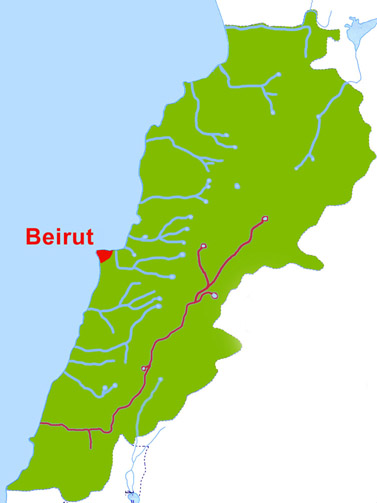
In the Middle East, the supply of water is much less than its demand, thereby resulting in conflict over it. This is true for Israel and Lebanon, where there have been struggles, although not always armed, for the waters of the Litani River. At this point, Israel occupies southern Lebanon. Part of the Litani is located in this region.

Israel seemingly is tempted to reach beyond its border to get access to the needed water. "Almost half of the water currently used in Israel is captured, diverted or preempted from its neighbors." This is understandable, given water can be described as "Israel's vulnerable and fragile source of life."

Historically, Israel has been interested in the Litani, and conflict with Lebanon over the Litani is more likely given this. Essentially, control of the Litani has long been a dream of Israel in hopes of establishing a greater Zion from Sinai to ancient Babylon. Litani River Wikipedia


Israel hoped that it would have use of the Litani by the mid 1980s, when it projected that it would have fully used up the waters captured in the 1967 war. Israel hoped to meet this goal by securing the Litani in 1978. Israel had even included the Litani in calculations of their water resources.

Israel's significant sources of water are currently exploited, and the only other source is the Litani, which, in order for Israel to use it, would have to be in Israel's possession, which could possibly happen through seizure. The only other source of additional water would be recycled water.

Israel could increase its annual water supply by 800 MCM (approximately 40% of its annual water consumption in 1993) if it had continued access to the Litani through continued/permanent occupation of southern Lebanon. Another reason for Israel to want the Litani is that, especially along the Israeli coast, many aquifiers are stressed and their water is increasingly brackish. Lebanon Conflict

Israel's High Water Consumption
There is a general consensus among hydrologists and water planners in Israel that the country is currently developing all of its replenishable water stock. Indeed, the gap between water supply and demand is widening.

As mentioned earlier, although the occupation of Arab land in 1967 augmented Israel's water supply by about 40%, the Jewish state is utilizing almost all of the renewable water resources available to it. As water demand rises, its supply is becoming ever more finite. That raises two fundamental questions: one about the future of the territories, and the other about the alternative sources of water for Israel. To answer these questions one must evaluate the Israeli economy's degree of dependence on the resources of the occupied territories.

Politics and Economics of Water
Israel's Water War

Tuesday, July 11, 2006

The Emerging World Water Shortage

WATER DEFICITS GROWING IN MANY COUNTRIES
Water Shortages May Cause Food Shortages
Lester R. Brown

The world is incurring a vast water deficit. It is largely invisible, historically recent, and growing fast. Because this impending crisis typically takes the form of aquifer overpumping and falling water tables, it is not visible. Unlike burning forests or invading sand dunes, falling water tables cannot be readily photographed. They are often discovered only when wells go dry.

The world water deficit is recent by-product of the tripling of water demand over the last half-century and the rapid worldwide spread of powerful diesel and electrically driven pumps. The drilling of millions of wells has pushed water withdrawals beyond the recharge of many aquifers. The failure of governments to limit pumping to the sustainable yield of aquifers means that water tables are now falling in scores of countries.

We are consuming water that belongs to future generations. In some countries, the fall of water tables is dramatic. In Yemen, a country of 19 million, the water table under most of the country is falling by roughly 2 meters a year as water use far exceeds the sustainable yield of aquifers. World Bank official Christopher Ward observes that "groundwater is being mined at such a rate that parts of the rural economy could disappear within a generation."

Iran, a country of 70 million people, is facing an acute shortage of water. Under the agriculturally rich Chenaran Plain in northeastern Iran, the water table was falling by 2.8 meters a year in the late 1990s. But in 2001 the cumulative effect of a three-year drought and the new wells being drilled both for irrigation and to supply the nearby city of Mashad dropped the aquifer by an extraordinary 8 meters. Villages in eastern Iran are being abandoned as wells go dry, generating a swelling flow of water refugees.

Shortages of water in Egypt, which is entirely dependent on the Nile River, are well known. With the Nile now reduced to a trickle as it enters the Mediterranean, the three principal countries of the Nile River Basin-Egypt, Ethiopia, and Sudan-can each increase its take from the river only at the expense of the other two. With the combined population of these countries projected to climb from 167 million today to 264 million in 2025, all three are facing growing grain deficits as a result of water shortages.

In Mexico-home to 104 million people and growing by 2 million per year-the demand for water has outstripped supply in many states. In the agricultural state of Guanajuato, for example, the water table is falling by 1.8-3.3 meters a year. Mexico City's water problems are legendary. How the United States and Mexico share the water of the Rio Grande has become a thorny issue in U.S.-Mexican relations.

A World Bank study of the water balance in the North China Plain calculated an annual deficit of 37 billion tons of water. Using the rule of thumb of 1,000 tons of water to produce 1 ton of grain, this is equal to 37 million tons of grain-enough to feed 111 million Chinese at their current level of consumption. In effect, 111 million Chinese are being fed with grain produced with water that belongs to their children. Scores of other countries are running up regional water deficits, including nearly all of those in Central Asia, the Middle East, and North Africa, plus India, Pakistan, and the United States.

Historically, water shortages were local, but in an increasingly integrated world economy, the shortfalls can cross national boundaries via the international grain trade. Water-scarce countries often satisfy the growing needs of cities and industry by diverting water from irrigation and importing grain to offset the resulting loss of production. Since a ton of grain equals 1,000 tons of water, importing grain is the most efficient way to import water. World grain futures will soon, in effect, become world water futures.

Although military conflicts over water are always a possibility, future competition for water seems more likely to take place in world grain markets. This can be seen with Iran and Egypt, both of which now import more wheat than Japan, traditionally the world's leading importer. Imports supply 40% or more of the total consumption of grain-wheat, rice, and feedgrains in both countries. Numerous other water-short countries also import much of their grain. Morocco brings in half of its grain. For Algeria and Saudi Arabia, the figure is over 70%. Yemen imports nearly 80% of its grain, and Israel, more than 90%.

Seventy percent of world water use, including all the water diverted from rivers and pumped from underground, is used for irrigation, 20% is used by industry, and 10% goes to residences. Thus if the world is facing a water shortage, it is also facing a food shortage. Water deficits, which are already spurring heavy grain imports in numerous smaller countries, may soon do the same in larger countries, such as China or India.

Even with the overpumping of its aquifers, China is developing a grain deficit. After rising to an historical peak of 392 million tons in 1998, grain production in the world's largest nation fell below 350 million tons in 2000, 2001, and 2002. The resulting annual deficits of 40 million tons or so have been filled by drawing down the country's extensive grain reserves. But if this situation continues, China soon will be forced to turn to the world grain market.

When this happens, it will almost certainly drive grain prices upward. Remember that when the Soviets decided after a poor harvest in 1972 to import grain rather than tighten their belts, the world wheat price climbed from $1.90 per bushel in 1972 to $4.89 in 1974.

The two keys to stabilizing aquifers are raising water prices and stabilizing population. The first step is to eliminate the pervasive subsidies that create artificially low prices for water in so many countries. The next is to raise water prices to the point where they will reduce pumping to a sustainable level by raising water productivity and reducing water use in all segments of society. Low-income urban consumers can be protected with Òlifeline ratesÓ that provide for basic needs at an affordable price.

The second key is to quickly stabilize population. Most of the 3 billion people projected to be added worldwide by mid-century will be born in countries already experiencing water shortages. Unless population growth can be slowed quickly by investing heavily in female literacy and family planning services, there may not be a humane solution to the emerging world water shortage. Population Press

Wednesday, July 05, 2006

Chemtrails or Phantom Clouds?

'Phantomwolken' - Bundeswehr gibt sich ahnungslos

“Phantom clouds” - German Military say they don't have a clue


I found this article at a German Weather website and have translated it as best I can using Google Translation Tools

This is interesting, because they caught the phantom clouds on radar registering as clouds (that from the ground were not there). People want to know what the military are spraying "up there" - but the military say they don't know. The article concludes that the military create more questions than they answer....

Nach einer Anfrage der Niedersächsischen Landesregierung hat auch die Bundeswehr ermittelt. Doch die Stellungnahme der Militärs wirft mehr Fragen auf, als sie beantwortet. Im Februar hat Donnerwetter.de den Fall der so genannten „Phantomwolke“ öffentlich gemacht. Im Juli 2005 zeigte das Wetterradar über Norddeutschland eine 350 Kilometer lange Wolke, die gar nicht existierte. Meteorologen verschiedener Organisationen, unter anderem des deutschen und des niederländischen Wetterdienstes, konnten natürliche Ursachen ausschließen. Einzige plausible Erklärung: Das Radarecho wurde durch Partikel oder Substanzen erzeugt, die in großer Menge in der Atmosphäre ausgesetzt wurden - so genannte „Düppel“. Zu welchem Zweck dies geschah, ist den Wissenschaftlern bis heute unklar. Donnerwetter.de erstattete deshalb Strafanzeige wegen des Verdachts illegaler Wetterexperimente und Umweltverschmutzung.

Im März tauchten dann mehrmals weitere, rätselhafte Strukturen in den Radarbildern über Deutschland auf - teilweise auch über Süddeutschland. Erst nach einer Anfrage des Grünen-Abgeordneten Ralf Briese an die Niedersächsische Landesregierung nahm die Bundeswehr Ermittlungen auf. Doch diese waren auch schnell wieder beendet. Dem Verteidigungsministerium sind die beobachteten Phänomene nach eigenen Angaben selbst nicht aufgefallen, Messdaten von der ersten ‚Radarwolke’ im Juli 2005 hat die Bundeswehr nicht gespeichert. Immerhin kommt auch das Verteidigungsministerium zu dem Schluss, dass „nur das Ausbringen sehr spezifischer Düppel in erheblicher Menge“ als Ursache in Frage käme. Und die Bundeswehr bestätigt auch, dass in der Nacht vom 22. auf den 23. März 2006 etwa 1 Stunde vor dem Auftauchen der merkwürdigen Echos auf dem Radar eine Luftkampfübung über den Niederlanden stattfand. Dabei seien auch Düppel ausgesetzt worden. Diese hätten sich jedoch nach etwa 1 Stunde und 10 Minuten „aufgelöst“. Zudem hätte die ausgesetzte Menge nicht für Radarechos in der beobachteten Größe ausreichen können, gibt das Verteidigungsministerium in seiner Stellungnahme an.

Wer für die Täuschungen des Wetterradars verantwortlich ist und zu welchem Zweck dies geschieht - diese Fragen werden von der Bundeswehr geschickt umschifft. Auf die Frage, ob es sich um militärische Experimente handelt, antwortet das Verteidigungsministerium: „Die Bundeswehr führt keine Experimente durch, die ein solches Phänomen hervorrufen könnte.“ Auch die Frage, ob es Kenntnisse über „entsprechende militärische Versuche über Norddeutschland mit dem Ziel der Terrorabwehr oder der Wetterbeeinflussung“ gebe, wird nahezu wortgleich beschieden: „Die Bundeswehr führt keine militärischen Versuche mit dem Ziel der Terrorabwehr oder zur Wetterbeeinflussung durch.“Die Bundeswehr scheidet also nach eigenen Angaben als Verursacher aus. Doch der Ursache der seltsamen Radarphänomene im deutschen Luftraum will die Bundeswehr offenbar auch nicht auf den Grund gehen. Und vor allem nicht der Frage nach dem Verursacher... Donnerwetter - Wetter Nachrichten


Google Translation: “Phantom clouds”
German Federal Armed Forces say they don't have a clue.


After an inquiry of the federal state government of Lower Saxony also the German Federal Armed Forces determined. But the statement that of military raises more questions, than it answers. In February Donnerwetter.de made the case „of the phantom cloud in such a way specified public “. In July 2005 the weather radar showed a 350 kilometers long cloud, which did not exist at all over Northern Germany. Meteoroligists of different organizations, among other things the German and the Netherlands weather service, could exclude natural causes. Only plausible explanation: The radar echo was produced by particles or substances, which were suspended in large quantity in the atmosphere - „chaff so mentioned “. At which purpose this happened, is the scientists until today unclearly. Donnerwetter.de refunded therefore charge because of the suspicion of illegal weather experiments and environmental pollution.

In March then several times further, puzzling structures dipped in the radar images over Germany up partly also over South Germany. Only after an inquiry of the Green delegate the German Federal Armed Forces determinations took up Ralf Briese to the federal state government of Lower Saxony. But these were also fast again terminated. The observed phenomena were noticeable to the Ministry of Defense according to own data themselves, measuring data of the first ‚radar cloud' in July 2005 the German Federal Armed Forces did not store. Also the Ministry of Defense nevertheless comes to the conclusion that „only the yield very specific chaff would come in substantial quantity “as a cause into question. And the German Federal Armed Forces confirm also that at the night of 22. on the 23. March 2006 about 1 hour before emerging the strange echoes on the radar a aerial engagement exercise over the Netherlands took place. Also chaff were suspended. These would have dissolved however after approximately 1 hour and 10 minutes „“. Besides the suspended quantity could have been sufficient not for radar echoes in the observed size, indicates the Ministry of Defense in its statement.

Who for the deceptions of the weather radar is responsible and for which purpose this happens - these questions are umschifft skillfully by the German Federal Armed Forces. To the question, whether it concerns military experiments, it answers the Ministry of Defense: „The German Federal Armed Forces do not accomplish experiments, which such a phenomenon could cause. “Also the question, whether it gives knowledge over „appropriate military attempts over Northern Germany with the goal of the terror defense or the weather influence “, is granted almost: „The German Federal Armed Forces do not accomplish military attempts with the goal of the terror defense or for weather influence. “ The German Federal Armed Forces separate thus according to own data as a causer. But the German Federal Armed Forces do not want to go to the cause of the strange radar phenomena in the German air space obviously also on the reason. And above all not the question about the causer...